


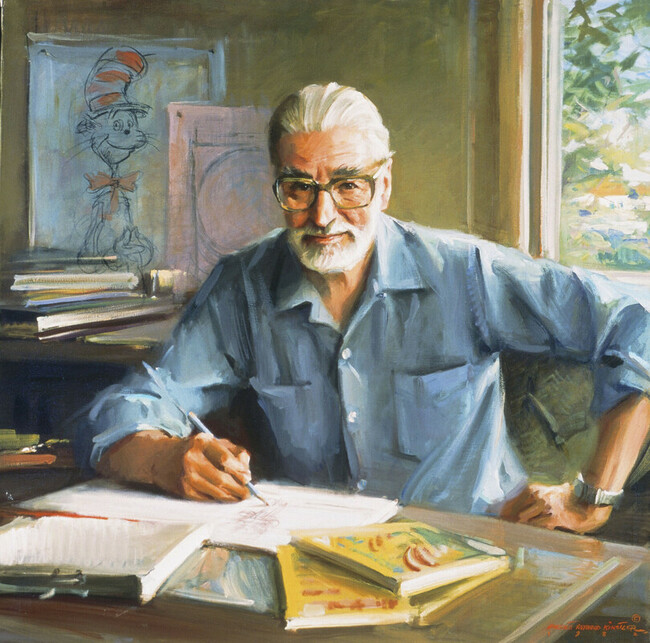
Ted Geisel in La Jolla: The San Diego Roots of Dr. Seuss
Few literary figures are as universally beloved as Theodor Seuss Geisel, known to generations as Dr. Seuss. While his whimsical worlds and unforgettable characters reached readers across the globe, the final—and deeply influential—chapter of his life was written not in New England or Hollywood, but along the dramatic coastline of La Jolla, in San Diego.
La Jolla wasn’t just where Geisel lived; it was where he created, reflected, and ultimately cemented his legacy.
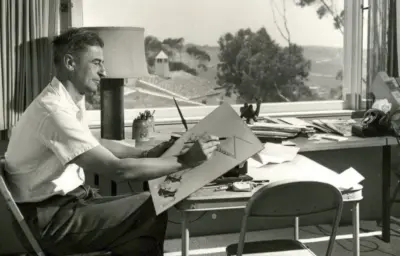

From Springfield to the Sea
Born in 1904 in Springfield, Massachusetts, Geisel’s early career spanned advertising, political cartoons, and children’s books. By the mid-20th century, he was already an icon—The Cat in the Hat, Green Eggs and Ham, and How the Grinch Stole Christmas! had transformed children’s literature with rhythmic language, imaginative illustrations, and moral clarity disguised as play.
Yet despite professional success, Geisel sought something quieter, more expansive—a place where creativity could breathe. That search led him west.
Discovering La Jolla
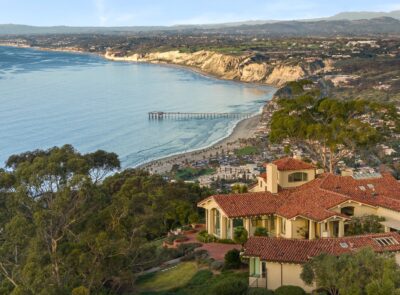
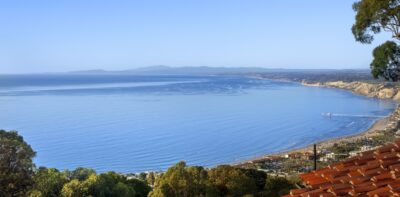
Geisel first came to La Jolla in the 1940s and was immediately drawn to its rare combination of privacy, intellectual culture, and sweeping natural beauty. In 1948, he and his wife Helen purchased property high above the Pacific in La Jolla Country Club Heights—one of the area’s most elevated and view-oriented neighborhoods.
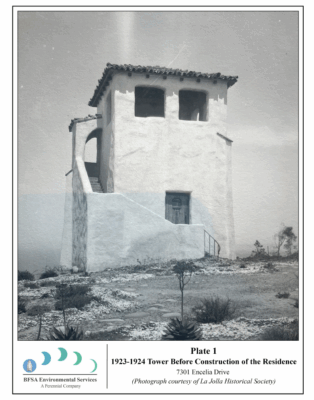
Long before Geisel arrived, the site was already notable. A Spanish Revival–style observation tower had been built in the early 1920s to showcase the “magnificent vistas” to prospective buyers. That same sense of wonder—the feeling of standing above it all—would later define Geisel’s connection to the property.
For Geisel, the elevation, horizon lines, and ever-changing light weren’t just scenic; they were fuel.

A Creative Sanctuary Above the Clouds
From his La Jolla home, Geisel wrote and illustrated many of his later works. The quiet, the ocean air, and the uninterrupted views created an environment perfectly suited to reflection and imagination. Friends and family often remarked that La Jolla gave him space—both literal and creative—to think differently.
It’s no coincidence that themes of perspective, responsibility, and stewardship became more pronounced in his later books. Works like The Lorax and Oh, the Places You’ll Go! echo a broader worldview—one shaped by years spent looking out over an endless horizon, watching the ocean shift with time and light.
La Jolla didn’t just inspire whimsy; it encouraged depth.

A Life Intertwined with San Diego
Geisel lived in La Jolla for more than four decades, remaining there until his death in 1991. During that time, he became deeply connected to San Diego’s cultural and academic institutions. His philanthropic legacy lives on most visibly through the Dr. Seuss Collection at the University of California, San Diego—home to thousands of original drawings, sketches, manuscripts, and personal items.
Though famously private, Geisel was a quiet participant in the region’s intellectual life, choosing San Diego not for spectacle, but for substance.
Why La Jolla Mattered to Dr. Seuss
La Jolla offered Geisel something rare:
- Privacy without isolation
- Natural beauty without distraction
- Inspiration without interruption
It was a place where imagination and environment coexisted effortlessly—where a man known for fantastical worlds could live grounded, observant, and deeply connected to place.
Today, La Jolla remains one of San Diego’s most coveted coastal communities, prized for the very qualities that drew Geisel decades ago: elevation, views, architectural character, and an enduring sense of legacy.

A Lasting Legacy on the Coast
Ted Geisel’s stories may feel timeless, but they were shaped by very real places. His La Jolla home—and the San Diego coastline beyond it—played a quiet yet profound role in the evolution of Dr. Seuss.
Above the Pacific, where ocean meets sky and imagination feels limitless, Geisel found not just a home, but a final muse.