

There are places that earn their reputations. La Jolla is one of them.
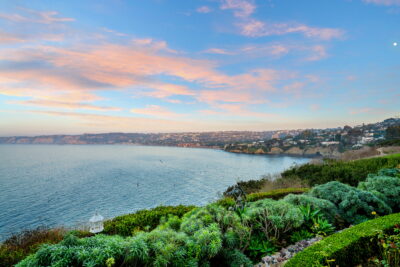
Perched along seven miles of dramatic Pacific coastline just north of downtown San Diego, La Jolla — “The Jewel” — has been drawing the discerning, the curious, and the captivated for well over a century. The bluffs are real. The light off the water is real. The sense that you’ve arrived somewhere that asks nothing of you except that you pay attention — that’s real too.
For luxury buyers looking at coastal San Diego, La Jolla is rarely a question of whether. It’s a question of where within — and understanding those distinctions is everything.

A Brief History of La Jolla
The land was home to the Kumeyaay people for thousands of years before European contact. The name itself reflects that layered past: most visitors assume “La Jolla” is Spanish for “The Jewel” — la joya — and the name fits. But historians often point to a more likely origin in the Kumeyaay word Woholle, meaning “hole in the mountains” or “caves.” Given the famous sea caves carved into the sandstone cliffs just south of the Cove, both readings feel appropriate.
As a modern American community, La Jolla effectively began on April 30, 1887, when developer Frank Botsford held a public auction of subdivided lots in what he called “La Jolla Park.” He had purchased 400 acres of former pueblo land, surveyed it with partner George Heald, and created a coastal village out of whole cloth — setting aside a stretch of blufftop adjoining the Cove as permanent open space from the very beginning. The railroad arrived in 1894, when the San Diego, Pacific Beach, and La Jolla Railway extended its tracks to the area and made the once-isolated coast suddenly, thrillingly accessible. The first wave of permanent residents followed.
What transformed La Jolla from a charming seaside village into something more enduring was the arrival of Ellen Browning Scripps. The journalist and philanthropist — heir to the Scripps newspaper fortune — moved to La Jolla in 1897 and spent the next three decades pouring her resources, her vision, and her insistence on preservation into the community. She didn’t just write checks. She founded institutions that still define the area: the Scripps Institution of Oceanography (1903), Scripps Health, the La Jolla Woman’s Club (designed by the great architect Irving Gill, 1914), The Bishop’s School (1909), and the Children’s Pool seawall (1931). She bought land to protect the rare Torrey Pine from development. She revitalized civic organizations, installed rubbish bins in parks, and understood — before most of her contemporaries — that preservation was more transformative than any construction project. La Jolla Park was renamed Ellen Browning Scripps Memorial Park in 1927 in her honor. She died in 1932, having lived long enough to see her vision realized.
The community she shaped — sophisticated but unassuming, rigorously beautiful, committed to protecting what makes it worth protecting — is still La Jolla today.
La Jolla’s Neighborhoods: A Guide for Buyers
La Jolla is not one neighborhood. It’s a collection of distinct communities, each with its own character, price point, and lifestyle. Understanding the differences matters.

The Village
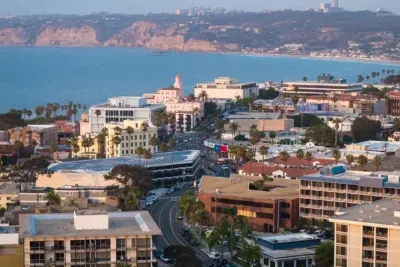
The commercial and cultural center of La Jolla, organized around Prospect Street and Girard Avenue. The Village is walkable, gallery-lined, restaurant-rich, and perpetually alive with the energy of people who have decided that today is a good day to be outside. Residential options here skew toward luxury condominiums and historic homes, with some of the most coveted addresses in coastal San Diego. Proximity to the Cove, to Ellen Browning Scripps Memorial Park, and to virtually every amenity the neighborhood offers makes Village addresses perennially in demand.

La Jolla Shores
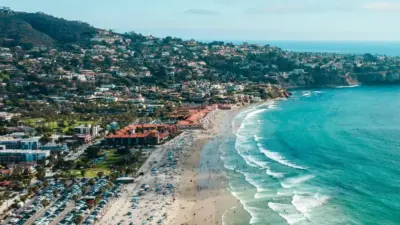
Known simply as “The Shores” by locals, this neighborhood hugs La Jolla’s most expansive beach — a mile-long stretch of wide, flat sand ideal for swimming, kayaking, and watching leopard sharks glide past in summer. The residential mix runs from postwar cottages and seaside condominiums to exceptional oceanfront estates, with the further inland you go, the more elaborate the homes and the more panoramic the views. The Shores has its own small commercial strip along Avenida de la Playa, with neighborhood restaurants, surf shops, and the unhurried atmosphere of a community that has made peace with its own perfection. Home to the Scripps Institution of Oceanography and Birch Aquarium at Scripps, it also carries a rare intellectual dimension that gives the neighborhood real depth.

La Jolla Farms
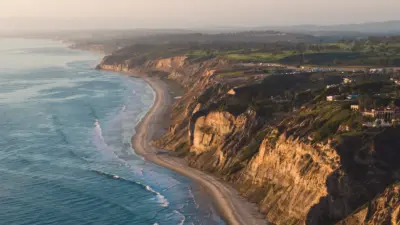
The pinnacle of La Jolla’s residential market, and one of the most exclusive addresses in California. Located at the northern edge of the community near UC San Diego, La Jolla Farms is accessed by private gated roads and comprises approximately 100 estates on lots of an acre or more, many with private access to Black’s Beach below. Ocean views here are not views — they are possessions. Architectural styles range from Mediterranean villas to contemporary glass pavilions designed by nationally recognized architects. Properties regularly trade between $10 million and $40 million, with notable estates well beyond that range. This is the community that serious ultra-luxury buyers come to understand last, because the first visit tends to end the search.

Muirlands
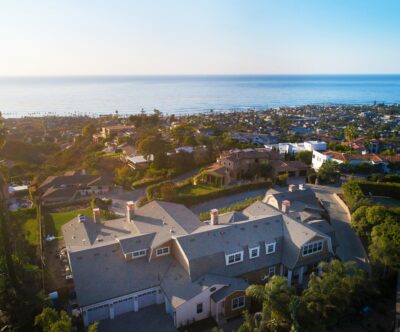
Named for Harold Muir, who built the first grand estate in the area, the Muirlands sits on the western slopes of Mount Soledad with some of La Jolla’s most dramatic panoramic views — ocean, bay, and on clear days, well beyond. The neighborhood has the lush, European-country feel of mature trees, generous lots, and homes that were built to last: Spanish Colonial revivals, Mediterraneans, and classic estates from the 1930s through the present. The combination of privacy, scale, and proximity to both the Village and the beaches makes Muirlands one of La Jolla’s most consistently sought-after addresses.

Windansea / Barber Tract
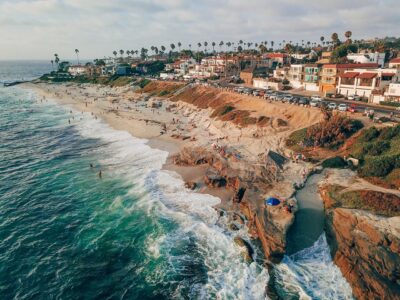
The storied surf break of Windansea Beach anchors the residential character of this neighborhood — relaxed, coastal, and deeply local. Homes along Camino de la Costa represent some of the most desired oceanfront addresses in La Jolla, with dramatic whitewater views and immediate beach access. The neighborhood has a distinct bohemian edge that persists even as values have climbed — a reminder that La Jolla’s personality is not simply about price.

Bird Rock
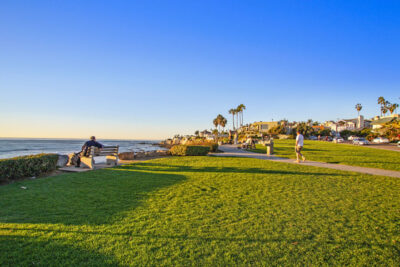
La Jolla’s southernmost neighborhood has a personality entirely its own: tight-knit, community-oriented, and anchored by a walkable business district on La Jolla Boulevard with independent restaurants and shops that feel genuinely local. Bird Rock Coffee Roasters is the kind of institution that defines the vibe. Tourmaline Surf Park sits at the neighborhood’s western edge, popular with longboarders and kiteboarders. The mix of oceanfront estates, beach cottages, and mid-century homes, combined with the award-winning Bird Rock Elementary School, makes this neighborhood a consistent draw for families who want La Jolla without the Village price premium.

La Jolla Country Club
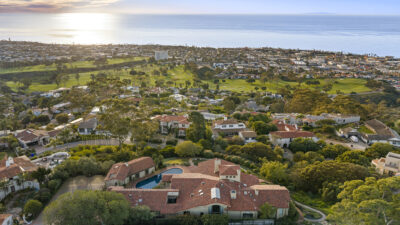
The private golf enclave at the south end of La Jolla, anchored by the La Jolla Country Club itself — a highly coveted membership that often passes through generations. Homes here are among La Jolla’s largest, on lots of an acre or more, with traditional architectural styles that lean toward Spanish Colonial, Mediterranean, and Classic Revival. Privacy and prestige define the address.
The La Jolla Lifestyle
What makes La Jolla feel different from other luxury coastal communities isn’t any single element — it’s the accumulation of them.
The Coast
La Jolla’s coastline is one of the most varied and visually extraordinary in Southern California. La Jolla Cove is a protected marine sanctuary — the first coastal underwater preserve on the West Coast — where sea lions bask on the rocks in numbers large enough to hear from Prospect Street. The Children’s Pool seawall, built by Ellen Browning Scripps to create a calm swimming cove for children, has long since been reclaimed by harbor seals, who gather there through the winter pupping season (December through May) in scenes that stop foot traffic cold. The seven sea caves carved into the sandstone bluffs south of the Cove — including Sunny Jim Cave, the only sea cave on the California coast accessible by land — draw kayakers and snorkelers year-round. La Jolla Shores offers a mile of wide, gentle beach ideal for families, beginning surfers, and anyone who wants room to breathe. Windansea is for the serious, its hard-breaking surf over reef attracting the kind of local commitment that built a legendary culture.
Outdoor Life
The Torrey Pines State Natural Reserve sits just north of La Jolla’s city limits — 2,000 acres of protected coastal wilderness, home to the rarest pine tree in North America. Eight miles of trails wind through wind-sculpted pines and chaparral along cliff edges overlooking the Pacific. For golfers, Torrey Pines Golf Course offers two 18-hole public championship courses perched above the ocean, host of the annual Farmers Insurance Open PGA Tour event and the 2021 U.S. Open. The Torrey Pines Gliderport — one of the most historic aviation sites in the country, with over a century of flying history — offers tandem paragliding over the cliffs for those who want La Jolla from the air. From the launch point, the coastline stretches from the Tijuana estuary to the north San Diego County beaches in a single unobstructed sweep.
Culture and Institutions
La Jolla has an institutional density that is rare for a community of its size. The Museum of Contemporary Art San Diego occupies the oceanfront building that was once Ellen Browning Scripps’ home, expanded and redesigned by Selldorf Architects and now one of the most architecturally significant contemporary art museums in California. The La Jolla Playhouse at UC San Diego has launched more Broadway productions than any regional theater in America — a claim few people outside the theater world know, and that almost everyone finds surprising. The Salk Institute for Biological Studies, its Jonas Salk–commissioned Louis Kahn building one of the most photographed pieces of architecture in the country, sits just above the cliffs at Torrey Pines. UC San Diego, adjacent to La Jolla’s northern edge, adds the energy and intellectual vitality of a world-class research university to the community’s character.
The Farmers Market and Village Life
The La Jolla Open Aire Market runs Sunday mornings at Girard Avenue and Genter Street — locally grown produce, artisan vendors, prepared foods, and the unhurried social rhythm of a neighborhood that knows how to use its Sundays. The Village’s commercial core along Prospect Street and Girard Avenue offers independent boutiques, galleries, and the kind of retail that resists homogenization — anchored by institutions like Warwick’s, one of the oldest family-owned bookstores in the country and a Village landmark since 1896.

Where Residents Dine
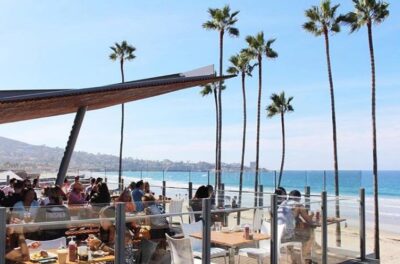
La Jolla’s dining scene is one of the strongest on the entire San Diego coastal corridor — and several of its restaurants belong in any serious conversation about the best in Southern California.
- George’s at the Cove — The defining La Jolla dining institution, open since 1984 and operating across three levels, each with sweeping Pacific views. The Ocean Terrace rooftop is the quintessential La Jolla lunch; Level2 anchors the neighborhood’s cocktail culture with an excellent happy hour; the lower level hosts the acclaimed Guest Chef Dinner Series. There is no better introduction to the neighborhood.
- NINE-TEN at Grande Colonial Hotel — At 910 Prospect Street inside the historic Grande Colonial Hotel, NINE-TEN is the choice for serious farm-to-table dining. Executive Chef Jason Knibb, whose tenure here spans two decades, trained under Wolfgang Puck and appeared on Food Network’s Iron Chef America. The seasonal tasting menu — offered as a “Mercy of the Chef” experience — is the kind of dinner that earns a return trip.
- The Marine Room — La Jolla Shores’ most iconic dining destination, set directly on the beach with waves that routinely brush the glass at high tide. The Marine Room has been a La Jolla landmark for over 80 years, and its combination of dramatic setting, California coastal cuisine, and impeccable service makes it the choice for celebrations.
- Eddie V’s — Fine seafood and hand-cut steaks with panoramic Cove views from the patio. The happy hour at Eddie V’s is one of La Jolla’s best-kept social rituals: oysters, cocktails, live jazz, and a terrace that faces the right direction at the right hour.
- Catania — Perched on the top floor of La Plaza at the corner of Wall and Girard, Catania serves housemade pastas, handcrafted pizzas from a 5,000-pound wood-burning oven, and fresh crudo, all with panoramic ocean views. Named one of Zagat’s 15 Hottest New Restaurants in the U.S. on opening and consistently one of La Jolla’s most sought-after dinner reservations since.
- Duke’s La Jolla — Hawaiian-California coastal fare with ocean views and a famous Barefoot Bar. The Hula Pie is a local institution. A more relaxed register than the Village’s white-tablecloth options, with a family-friendly energy and a patio that does its job at sunset.
- Paradisaea — Located in the historic Piano Building in Bird Rock, Paradisaea is one of La Jolla’s most compelling newer arrivals — recommended by the Michelin Guide in 2023, 2024, and 2025, with chef Anders Rubini’s accessible but precisely executed California fare making this the neighborhood favorite that residents keep to themselves.
- The Cottage La Jolla — The go-to for breakfast and brunch, with a vine-covered garden patio and a menu that has been drawing locals to its corner of Fay Avenue for decades.
- Sugar and Scribe — La Jolla’s essential bakery-café, beloved for French pastries, beautiful cakes, and a weekend brunch that regularly draws a line. The kind of place that anchors a neighborhood’s morning routine.

Summer in La Jolla
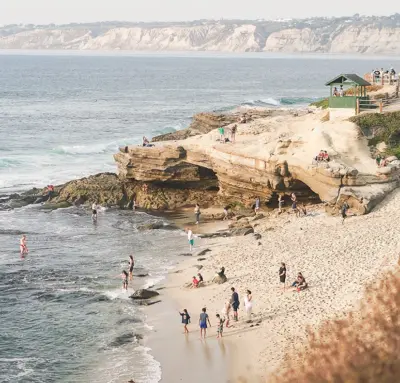
If La Jolla has a season, it is summer — and summer here arrives early and stays late, which is half the reason people move here in the first place.
The warm months bring the leopard sharks to La Jolla Shores, where hundreds of pregnant females gather in the shallower warm water from June through September. Snorkeling alongside them — they are harmless, gentle, and startling to encounter — is one of the more surreal and memorable things available in Southern California. Kayak and snorkel tours launch daily from the Shores through outfitters like La Jolla Kayak and Hike Bike Kayak San Diego, covering the sea caves, the Cove, and the kelp forests of the underwater park.
The Farmers Insurance Open at Torrey Pines brings PGA Tour energy to January. The La Jolla Concours d’Elegance, held annually in April at Ellen Browning Scripps Park, draws 150-plus rare and vintage automobiles to the blufftop lawn above the Cove — one of the most striking settings for a car show in the country. The La Jolla Art & Wine Festival in October closes out the warm-weather social calendar with two days of juried art, 40-plus wineries, and the kind of crowd that actually looks at the work.
Summer evenings in La Jolla resolve into the same pattern for most residents: a walk along the Coast Walk Trail above the Cove, the light going amber, the sea lions audible below, dinner somewhere on Prospect Street. It is, by any reasonable measure, a good way to spend a Tuesday.
Schools
La Jolla’s education landscape is one of the strongest draws for families, with both public and private options that consistently rank among the best in California.
Public Schools (San Diego Unified School District)
- La Jolla Elementary School — One of the district’s most highly regarded elementary schools, consistently earning high marks for academics and community engagement.
- Muirlands Middle School — The primary public middle school for La Jolla students, with strong academic programming and a large, active parent community.
- La Jolla High School — A flagship San Diego Unified campus with deep alumni roots in the community, strong AP and arts programming, and one of the most recognizable campuses in the district.
- Bird Rock Elementary School — An award-winning elementary school anchoring the Bird Rock neighborhood, known for strong test scores and a tight-knit community culture.
Private Schools
- The Bishop’s School — Ranked the #1 private high school in San Diego County and #2 in California by Niche, and consistently placed among the top independent schools in the nation. Founded in 1909 with support from Ellen Browning Scripps and designed by architect Irving Gill, Bishop’s offers grades 6–12 with an Episcopal tradition, rigorous academics, and college placement records that speak for themselves.
- La Jolla Country Day School (LJCDS) — A PK–12 independent school on a 24-acre La Jolla campus, ranked among the top 35 private high schools in California. Known for individualized learning, a 7:1 student-to-teacher ratio, and an extraordinarily broad range of curricular and extracurricular offerings.
- Francis W. Parker School — A Mission Hills-based PK–12 independent school widely considered one of San Diego’s premier academic institutions, drawing students from across the county including La Jolla and Rancho Santa Fe.
- The Preuss School UC San Diego — A charter middle and high school on the UC San Diego campus, ranked among the best public schools in the San Diego area and notable for its rigorous college-preparatory mission.

La Jolla Real Estate: What Buyers Need to Know
La Jolla commands some of the highest real estate prices in San Diego County — and the market has continued to perform. Median home prices reached approximately $2.5 million in early 2026, up more than 10 percent year over year. Single-family homes in premium locations regularly exceed $4 million; oceanfront estates in neighborhoods like La Jolla Farms and Windansea Beach trade between $10 million and $40 million, with notable transactions well above that range.
The market is competitive at the entry and mid tiers — properly priced homes in the most desirable sub-neighborhoods can receive multiple offers and go pending quickly. Ultra-luxury properties trade with more patience, but sustained demand from domestic buyers, international investors, and second-home purchasers means that inventory remains constrained in ways that consistently support values.
What makes La Jolla’s real estate market genuinely distinctive is the diversity of what’s available within a single ZIP code. A buyer seeking walkable Village condominium living, another seeking a private Muirlands estate, and a third seeking a gated oceanfront compound in La Jolla Farms are all operating in the same community — but essentially in different markets. Understanding which neighborhood fits which lifestyle, and which micro-streets within those neighborhoods hold the most sustained value, is where local expertise matters most.
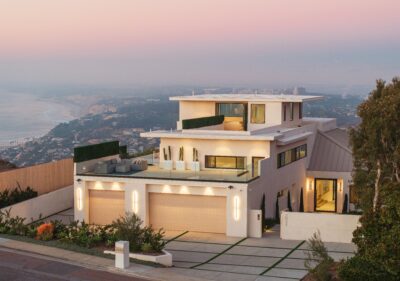

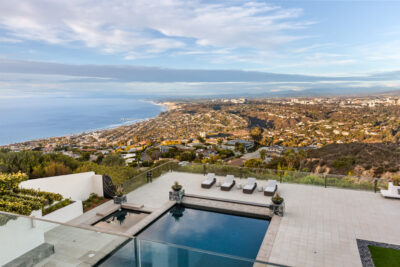
Among the properties currently available, 2082 Via Casa Alta represents one of La Jolla’s most compelling opportunities. Rebuilt from the ground up in 2024 and perched in the hills above Mount Soledad, this 6,930-square-foot modern estate offers five bedrooms, panoramic views of the Pacific Ocean, La Jolla’s coastline, and the Coronado Islands, an oversized pool, pool house, and fire pit on 0.76 acres — and is available both for purchase and for lease.
The Jason Barry Team has represented buyers and sellers across La Jolla’s full range, from Bird Rock cottages to La Jolla Farms estates. If you’re beginning your search — or narrowing it — we’re here to help you understand exactly where within La Jolla makes sense for you.
Frequently Asked Questions About La Jolla Real Estate
What is the average home price in La Jolla? La Jolla median home prices reached approximately $2.5 million in early 2026, with significant variation by neighborhood. Village condominiums typically start around $1 million; single-family homes in desirable sub-neighborhoods regularly trade above $4 million; oceanfront estates in La Jolla Farms and along Windansea Beach can reach $10–40 million or more.
What are the best neighborhoods in La Jolla for luxury buyers? La Jolla Farms is the community’s most prestigious address, offering gated privacy, multi-acre lots, and private beach access to Black’s Beach. The Muirlands delivers panoramic views on generous lots with a classic architectural character. The Village provides walkable luxury with immediate access to La Jolla Cove and the best of La Jolla’s dining and cultural scene. Windansea and the Barber Tract offer dramatic oceanfront access with a more intimate, surf-culture feel.
Is La Jolla a good place to raise a family? Consistently one of the strongest family communities in San Diego County. La Jolla’s combination of highly ranked public schools, nationally recognized private schools (including The Bishop’s School and LJCDS), safe neighborhoods, outdoor lifestyle, and proximity to beaches and parks makes it a top choice for families relocating to coastal San Diego.
How far is La Jolla from downtown San Diego? La Jolla is approximately 12–15 miles north of downtown San Diego — typically a 20–25 minute drive on I-5 under normal traffic conditions. San Diego International Airport is approximately 20 minutes away.
What is La Jolla known for? La Jolla is known for its dramatic Pacific coastline, La Jolla Cove and the resident sea lion colony, the Children’s Pool harbor seal rookery, world-class dining and galleries along Prospect Street, Torrey Pines State Natural Reserve, the Torrey Pines Golf Course and Farmers Insurance Open, UC San Diego and the Salk Institute, the Museum of Contemporary Art San Diego, and some of the most coveted residential real estate in California.
Does La Jolla have a homeowners association? Most of La Jolla’s residential neighborhoods are not governed by community-wide HOAs. Individual developments, condominiums, and gated communities like La Jolla Farms do have HOAs with associated dues and CC&Rs. A knowledgeable buyer’s agent can walk you through the specifics for any property you’re evaluating.
Ready to Explore La Jolla?
The Jason Barry Team has deep roots across the full La Jolla corridor — from Bird Rock to the Farms, from the Village to the Muirlands. Whether you’re relocating from out of state, upgrading within coastal San Diego, or evaluating La Jolla as part of a broader search that includes Rancho Santa Fe, Del Mar, or the greater coastal San Diego corridor, we bring the market knowledge, the local relationships, and the off-market access that La Jolla’s competitive landscape demands.
Contact the Jason Barry Team to begin your search.